
As a leading company in the amusement ride industry, Dinis Amusement Ride Manufacturer places the highest priority on safety. Roller coasters are among the most thrilling attractions in amusement parks worldwide, yet ensuring their safe operation involves meticulous engineering, regular maintenance, and comprehensive safety protocols. Here, we provide an overview of the essential safety measures that are integral to roller coaster design and operation.

1. Rigorous Design Standards
The foundation of roller coaster safety begins with design. At Dinis Amusement Equipment Supplier, we adhere to international safety standards, such as those set by ASTM International and the International Organization for Standardization (ISO). Engineers use advanced computer simulations to model the forces exerted on a roller coaster during operation. These simulations help ensure that the ride can withstand these forces while providing a thrilling yet safe experience for passengers.
2. High-Quality Materials and Construction
Using high-quality materials is crucial for the durability and safety of roller coasters. At Dinis, we source materials (FRP and steel)that meet stringent safety standards and undergo rigorous testing for strength and reliability. Our construction processes are carried out by skilled technicians who ensure that every component is assembled with precision.
3. Comprehensive Testing and Inspection
Before a roller coaster fairground ride is opened to the public, it undergoes comprehensive testing. This includes both static and dynamic testing to evaluate the performance of the ride under various conditions. Each component is inspected for defects, and the entire system is tested for functionality. These inspections are carried out by certified professionals who ensure that every aspect of the ride meets safety requirements.
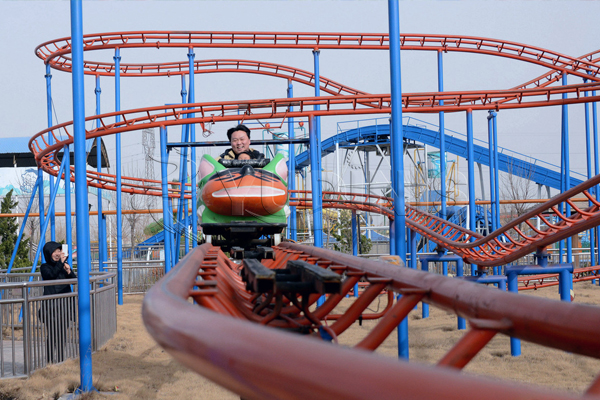
4. Regular Maintenance and Inspection
Once in operation, regular maintenance is essential for continued safety. At Dinis, we provide detailed maintenance schedules and guidelines to our clients. Regular inspections are conducted to identify any signs of wear and tear, and maintenance work is performed to address potential issues before they can impact safety.
5. Operator Training
Proper training for ride operators is another critical component of amusement park coaster ride safety. Operators are trained to handle various situations, including emergency procedures. They are responsible for ensuring that all safety equipment, such as restraints and seat belts, is functioning correctly and that passengers are securely fastened before the ride begins.
6. Emergency Response Plans
Having a well-defined emergency response plan is vital. These plans are designed to address potential emergencies, such as power failures or mechanical issues, and ensure that passengers can be safely evacuated if necessary. Regular drills and training sessions are conducted to prepare staff for these situations.
7. Passenger Guidelines
Passenger cooperation is also critical for safety. Clear guidelines are provided to ensure passengers understand safety protocols, such as keeping arms and legs inside the ride and properly using restraints. Signage and announcements are used to communicate these guidelines effectively.

In conclusion, the safety of roller coasters is achieved through a combination of rigorous design, high-quality construction, regular maintenance, comprehensive training, and clear communication. At Dinis Amusement Ride Manufacturer, we are committed to these safety measures to ensure that every ride delivers not only excitement but also peace of mind for operators and passengers alike. By prioritizing safety at every stage, we continue to lead the industry in providing thrilling yet safe amusement ride experiences. If you are interested in Dinis amusement park roller coaster ride, welcome to visit our website and learn more information about it.